Wild Scotland — Landscapes, Legends & Untamed Beauty
Scotland is not simply a country you visit. It is a country you feel. It lives in the sweep of wind across…
Scotland is not simply a country you visit. It is a country you feel.
It lives in the sweep of wind across open moorland, in the hush that settles over a loch at dawn, and in the slow turning of clouds around mountain peaks that seem older than time itself. There are places in the world where beauty is ornamental, designed, polished, and easily consumed. Scotland is not one of them. Its beauty is elemental. It is shaped by ice and storm, by volcanic fire and restless sea.
To travel here is to enter a landscape that feels alive. The earth rises and folds with quiet authority. Rivers carve through stone as they have done for millennia. Weather arrives unannounced, shifting light from silver to gold to shadow within minutes. Nothing feels static. Everything feels in motion.
Yet beneath this wildness lies intimacy. Small villages cling to coastlines. Single-track roads weave through valleys where sheep outnumber people. Fires burn inside whitewashed cottages while rain sweeps across hills beyond the window. Scotland’s wild places are vast, but they are never empty. They are inhabited — by wildlife, by history, by memory.
In this journey through Wild Scotland, prepare to step beyond postcard views and into a Scotland that is raw, powerful, and unforgettable.
1. The Highlands — Heart of the Wild
The Highlands form the emotional and geographical core of wild Scotland. Stretching north and west from the central belt, this region encompasses mountain ranges, peat moors, glens, and freshwater lochs that together create one of Europe’s most dramatic landscapes.
The terrain was sculpted during the last Ice Age. Vast glaciers moved slowly across the land, grinding rock into valleys and carving out deep basins that later filled with water. When the ice retreated, it left behind a landscape of staggering scale, sharp ridges, U-shaped valleys, and lochs that mirror the sky.
Driving through the Highlands can feel like crossing an ancient world. Roads narrow and twist between peaks. Long stretches pass without villages. You may travel for miles with only deer grazing at the roadside and golden light spreading across heather-covered slopes.
The Highlands are also shaped by human history. For centuries, clan communities lived from this land, herding cattle, farming small plots, and speaking Gaelic as their everyday language. The Jacobite risings of the 17th and 18th centuries left scars across the region, and the Highland Clearances of the 18th and 19th centuries displaced thousands of families. Entire communities were uprooted, many forced to emigrate overseas.
Despite hardship, the cultural memory of the Highlands remains powerful. The landscape has become a symbol of resilience, vast, enduring, and unbroken.
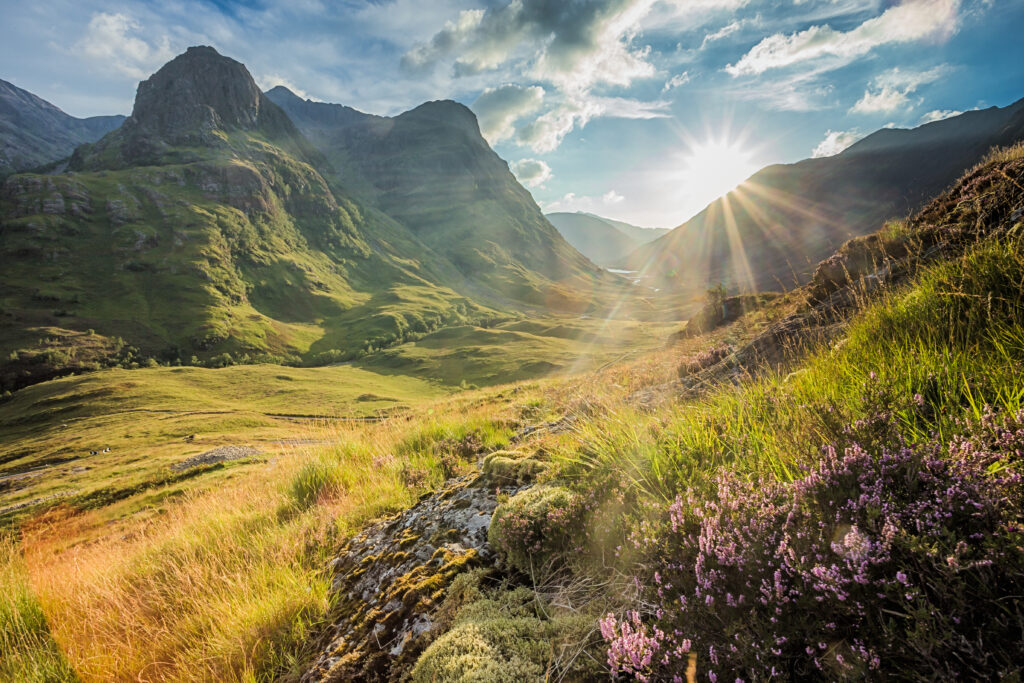
To stand in a Highland glen as evening falls is to understand this connection. The silence is profound. The air carries the scent of peat and pine. Mountains rise like guardians around you. It feels timeless.
2. Ben Nevis and the Mountain Realm
Towering above the town of Fort William stands Ben Nevis, the highest mountain in the British Isles. Its summit often hides behind cloud, giving it an air of mystery even on clear days.
Climbing Ben Nevis is both accessible and demanding. Thousands attempt the ascent each year, following a winding mountain path that rises steadily toward the summit plateau. Weather can change rapidly. Sunshine at the base may give way to freezing mist at the top.
The mountain is part of a wider range that includes dramatic ridges and narrow passes. For experienced climbers, the north face presents a formidable challenge of rock and winter ice. For walkers, surrounding glens offer gentler routes with equally rewarding views.
Mountains in Scotland are known as Munros if they rise above 3,000 feet. For many outdoor enthusiasts, climbing all Munros becomes a lifelong goal. The pursuit is less about conquest and more about connection, an intimate exploration of terrain.
From the summit on a clear day, the view stretches across lochs, peaks, and distant islands. It is a reminder of scale, of space, of wildness that continues beyond sight.
3. Hidden Glens and Secret Lochs
While famous landmarks attract visitors, some of Scotland’s most profound beauty lies off the main routes.
Narrow side roads lead into glens where waterfalls tumble over rock shelves and small lochs sit undisturbed beneath encircling hills. These quieter spaces often feel deeply personal, as though discovered rather than visited.
In such places, the soundscape shifts. Instead of traffic, you hear wind brushing grass. Instead of conversation, you hear birds calling across open space. Light moves slowly across the water’s surface.
Many lochs are steeped in local lore. Some are said to hide ancient creatures. Others are associated with lost villages submerged beneath rising waters. Whether these tales hold truth matters less than the atmosphere they create.
Here, wild Scotland feels intimate and contemplative.

4. Isle of Skye — Drama and Myth
The Isle of Skye remains one of Scotland’s most iconic landscapes. Its jagged peaks, cascading waterfalls, and sea cliffs seem almost theatrical in their intensity.
The Cuillin mountain range dominates the island’s southern skyline. These dark, serrated peaks attract climbers from across the world. Even viewed from a distance, they command attention.
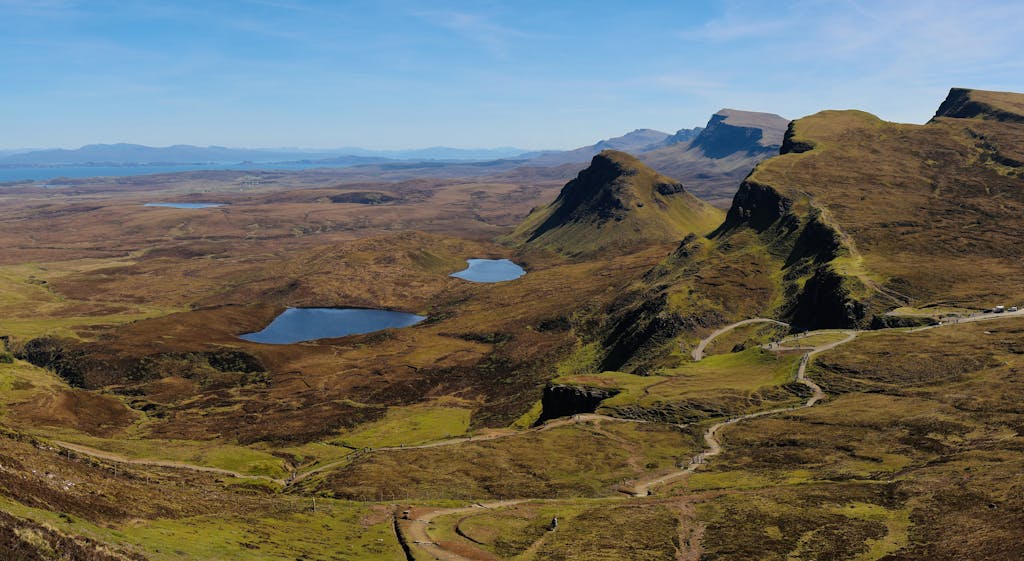
Elsewhere on Skye, geological wonders abound. The Quiraing forms a surreal landscape of landslips and towering rock formations. The Old Man of Storr rises sharply against the horizon, a solitary pinnacle shaped by ancient forces.
Skye’s coastline is equally compelling. Waves crash against basalt cliffs. Hidden coves reveal clear turquoise water on calm days.
Beyond its physical beauty, Skye is rich in Gaelic heritage. Traditional music sessions still fill local halls. Stories of faeries and selkies linger in village lore. The landscape feels inseparable from imagination.
To watch sunset over Skye, as mountains turn purple and sea reflects amber light, is to witness wildness softened by beauty.

5. The Outer Hebrides — Edge of the World
Further west lie the Outer Hebrides, a chain of islands stretching into the Atlantic. Life here is shaped by sea and sky.
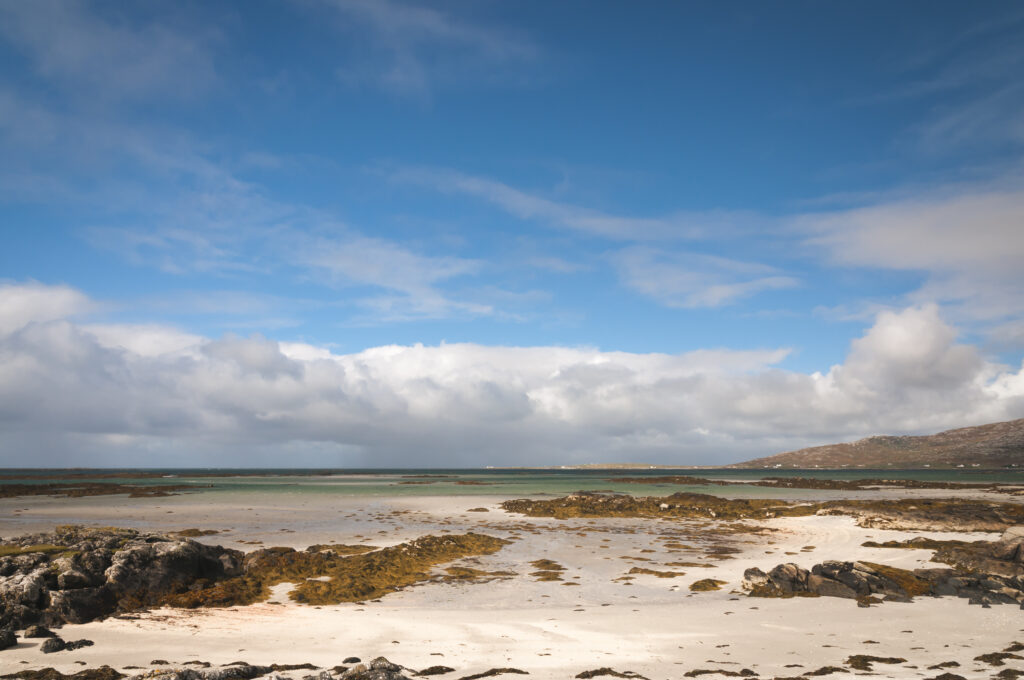
Beaches along Harris are astonishing, wide expanses of white sand and water so clear it appears tropical. Yet even in summer, the wind carries a cool edge. The Atlantic defines daily rhythm.
Lewis offers rugged moorland and ancient archaeological sites. Crofting remains central to community life. Sheep graze against vast horizons.
Isolation has preserved culture. Gaelic remains widely spoken. Traditional weaving produces Harris Tweed, crafted by islanders in their homes.
Sunsets here are expansive. With little light pollution, night skies blaze with stars. The sense of space is extraordinary.
The Hebrides embody wildness not as harshness, but as purity.
6. Cairngorms National Park — Forest and Plateau
The Cairngorms offer a different wild character, expansive, elevated, and ecologically rich.
Ancient Caledonian pine forests survive here, remnants of woodland that once covered much of Scotland. These forests host red squirrels, pine martens, and capercaillie.
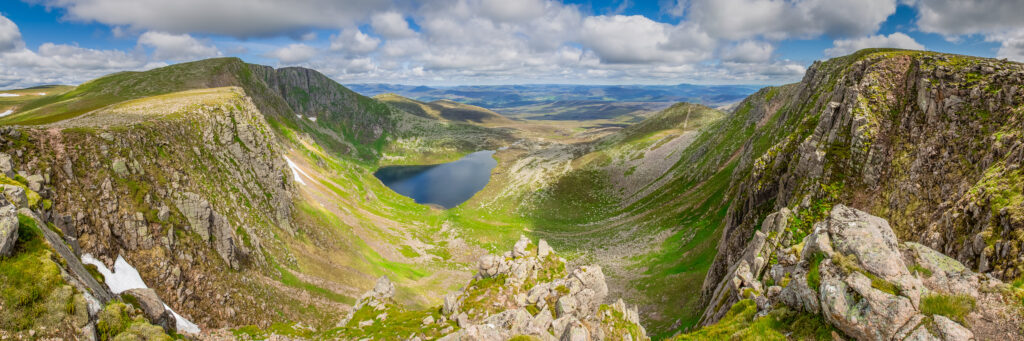
Above the tree line, high plateaus stretch wide and open. In winter, snow transforms the landscape into something Arctic in atmosphere.
Rivers wind through glens, supporting salmon and otter populations. Lochs reflect mountain silhouettes.
The Cairngorms represent conservation in action. Efforts to restore woodland and reintroduce species aim to rebalance ecosystems shaped by centuries of human use.
Wild Scotland here feels hopeful, a landscape both ancient and evolving.
7. Coastlines and Sea Cliffs
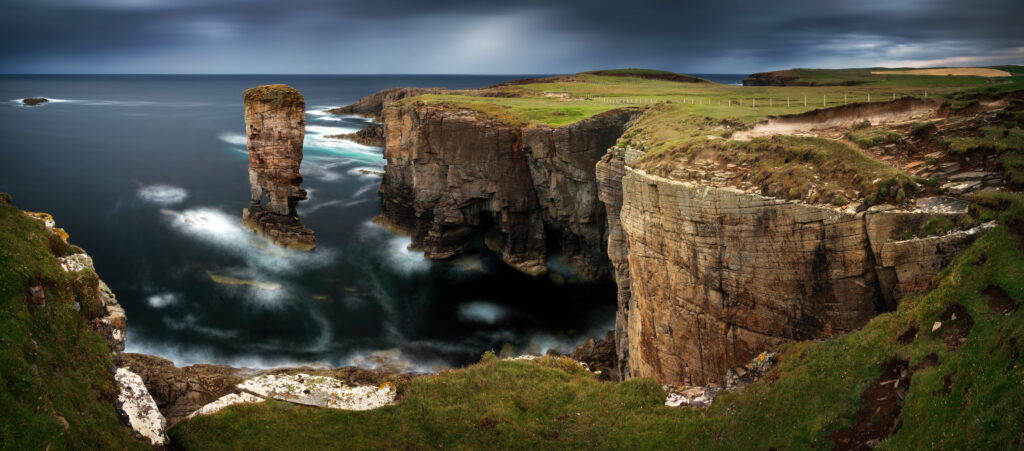
Scotland’s coastline extends over 10,000 miles when its islands are included. Sea cliffs rise dramatically in places, particularly along the northern and eastern shores.
Waves crash against rock with rhythmic force. Seabirds nest in enormous colonies on sheer cliff faces. Puffins gather during breeding season, their bright beaks vivid against grey stone.
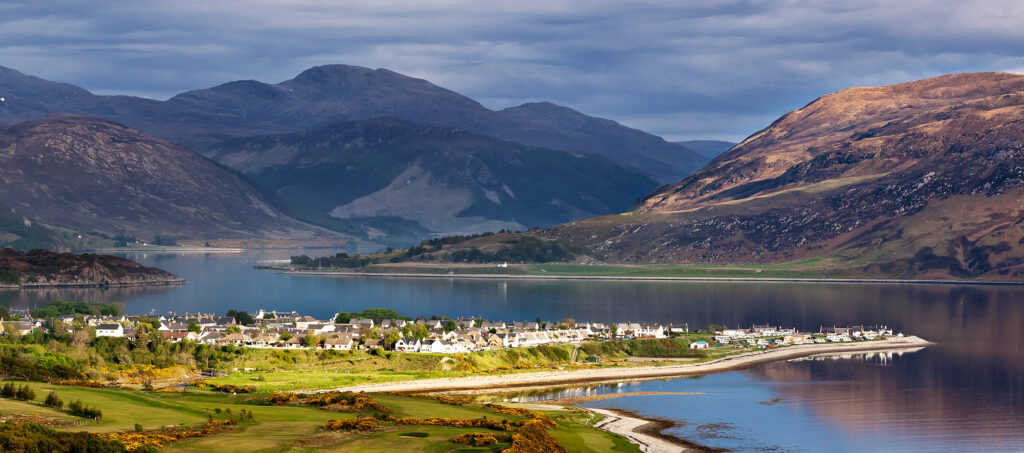
Fishing villages dot the east coast, colourful houses clustered around small harbours. On the west, sea lochs cut deeply inland, creating sheltered waterways framed by mountains.
The meeting of land and sea defines Scottish identity. It shaped trade, exploration, and livelihood for centuries.
Watching a storm roll in from the Atlantic is a powerful experience. The sky darkens. Wind intensifies. Nature asserts itself without apology.
8. Wildlife — A Living Landscape
Wild Scotland is animated by the creatures that inhabit it.
Red deer move across Highland slopes, particularly visible in autumn. Golden eagles soar high above glens. Seals bask along rocky shores.
In coastal waters, dolphins and whales can sometimes be seen breaching the surface. Otters slip quietly along riverbanks at dusk.
Rewilding initiatives aim to expand habitats and restore biodiversity. Native woodland regeneration encourages bird and insect populations.
Wildlife sightings often feel earned, moments of quiet reward for patience and observation.

9. Seasons of the Wild
Each season transforms Scotland’s landscapes.
Spring brings lambs to hillsides and wildflowers to forest floors. Summer offers long daylight hours, particularly in the north, where twilight lingers near midnight.
Autumn paints glens in gold and rust, and deer rutting calls echo across valleys. Winter strips back colour, revealing stark beauty beneath snow and frost.
Weather is unpredictable. Sunlight can break through rain in dramatic bursts. Rainbows arc across lochs. Mist rolls down slopes like theatre curtains.
Wild Scotland is never static. It is cyclical and ever-changing.
10. Dark Skies and Northern Light
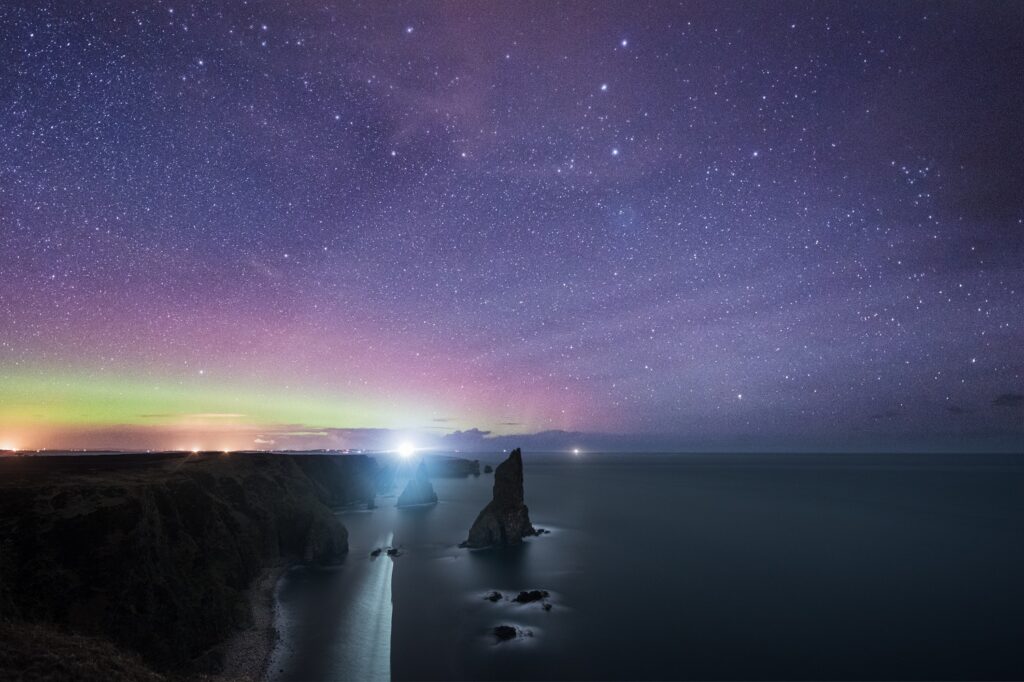
In remote regions, particularly in the north and west, night skies reveal astonishing clarity.
With minimal artificial light, constellations appear sharply defined. The Milky Way stretches across darkness in brilliant detail.
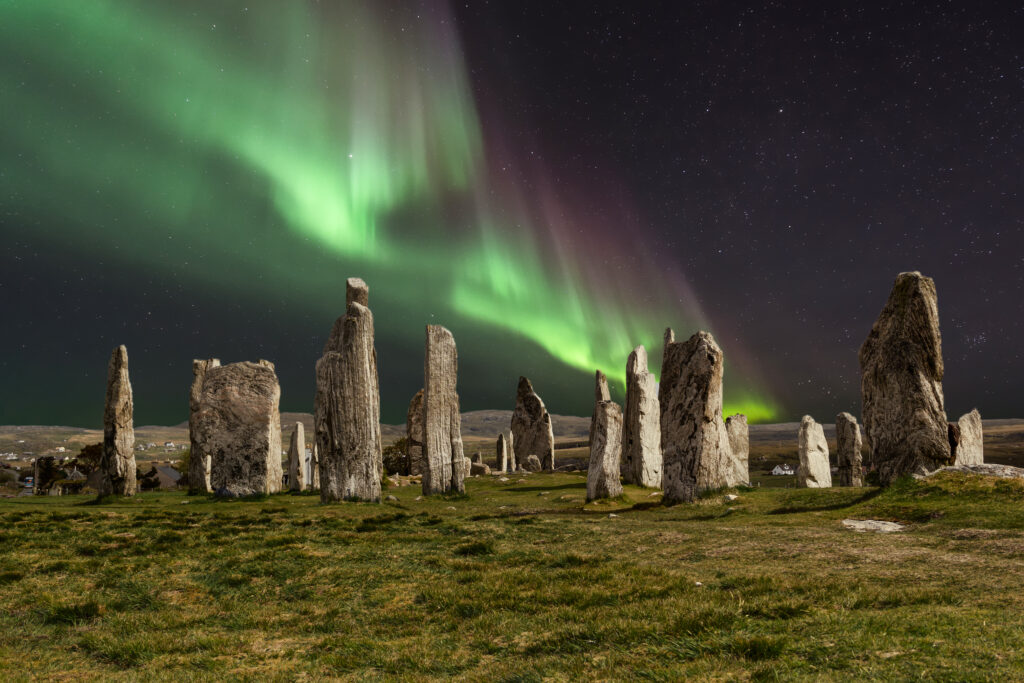
During certain winter months, the Northern Lights may shimmer across northern skies, subtle greens and purples dancing above mountains and sea.
To stand beneath such a sky is to feel both small and deeply connected.
11. Land, Memory, and Belonging
Perhaps what makes Scotland’s wild places so powerful is the way they shape belonging.
For centuries, clans associated themselves with specific glens and territories. Songs were written not only about people, but about rivers and hills. Emigrants carried memories of landscape with them across oceans.
Even today, many describe returning north as a homecoming, regardless of birthplace.
The land is not backdrop. It is identity.
12. Scotland’s Castles in the Wild
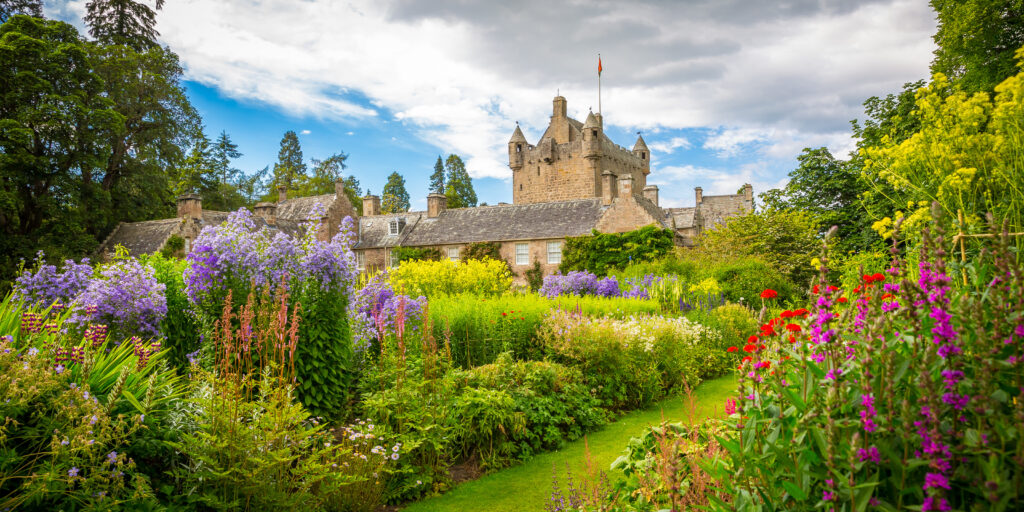
Across Scotland’s landscapes stand the remnants of a turbulent past, castles perched on cliffs, guarding narrow glens, or rising above lochs like silent witnesses to history.
Some are vast fortresses that once housed powerful clans. Others are little more than ruined towers, their stone walls softened by moss and time.
Many castles were built in strategic locations, chosen not just for defence but for visibility. From their ramparts, clans could watch valleys, rivers, and approaching travellers. The landscape itself became part of the castle’s protection.
Today, these ruins blend into the terrain that surrounds them. A castle on a hill may appear almost natural, as though it grew from the rock beneath it.
Walking among these ancient walls invites reflection. Battles were fought here, alliances forged, and stories born that would echo through Scottish folklore for centuries.
Yet now, the loudest sound is often only wind moving through empty windows.
In this way, Scotland’s castles connect the human past with the enduring wildness of the land.
13. The Sound of Scotland — Wind, Water and Music
Wild Scotland is not silent. Its landscapes carry a unique and ever-changing soundscape.
Wind sweeps across open moors, whispering through tall grasses and heather. Rivers rush over stone as they descend through Highland glens. Waves roll steadily against rocky shores.
These natural rhythms have long influenced Scotland’s music.
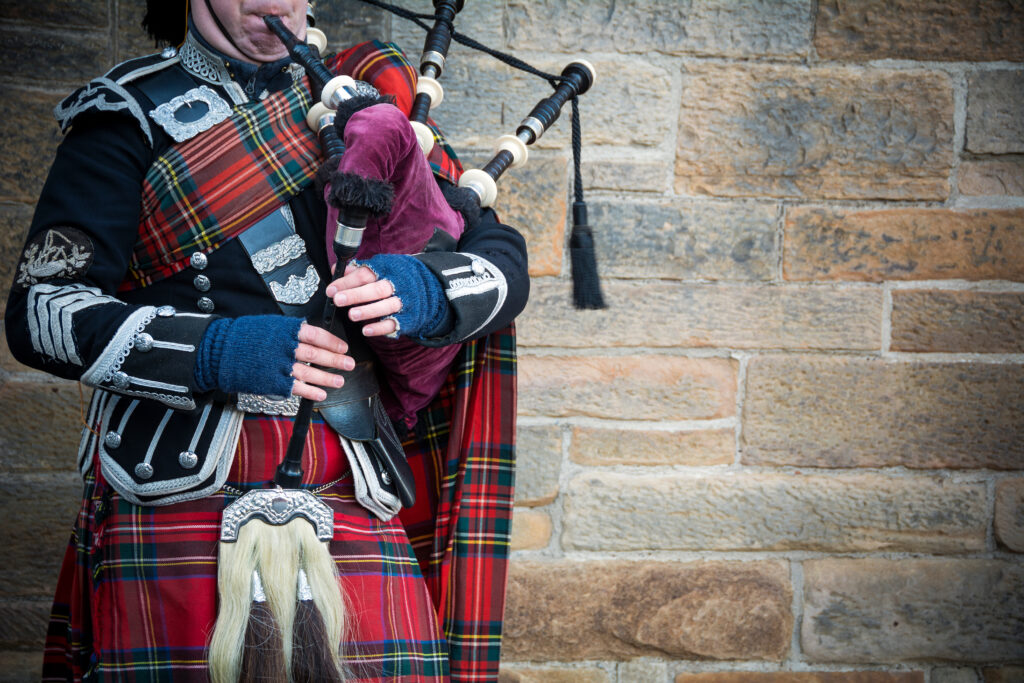
Traditional folk songs often mirror the movement of the landscape itself, slow, haunting melodies that rise and fall like hills or flowing water. The sound of bagpipes drifting across a valley can feel almost inseparable from the terrain around it.
Music in Scotland is not confined to concert halls. It lives in village pubs, community halls, and informal gatherings where musicians play late into the night.
In remote areas, these sessions can feel timeless. Fiddles, pipes, and voices combine to tell stories of love, exile, heroism, and home.
Just like the land itself, Scottish music carries memory.
14. Wild Trails and Long Walks
For many travellers, the best way to experience Scotland’s wild landscapes is on foot.
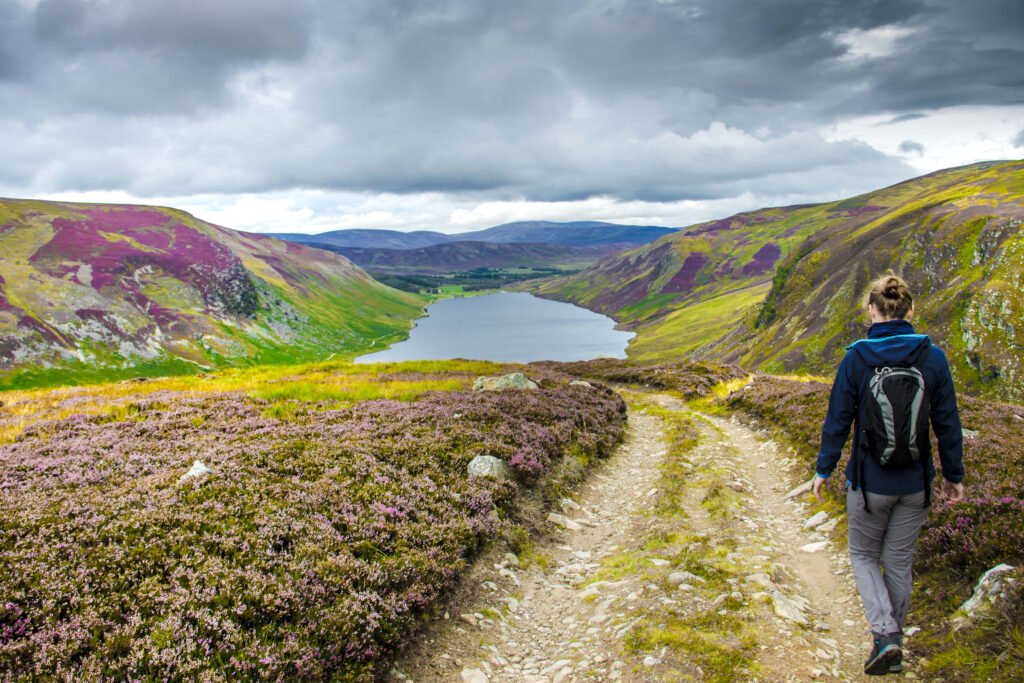
Long-distance walking routes weave across the country, linking forests, mountains, lochs, and coastlines into journeys that unfold over days or even weeks.
These trails pass through remote terrain where the pace of modern life feels distant. Walkers move slowly across the land, noticing details often missed from a car window, the scent of pine in warm sunlight, the distant cry of a curlew, the subtle shift of colour across a hillside.
Paths may lead through ancient forests, across open moorland, or along narrow coastal ridges where the sea stretches endlessly to the horizon.
There is a deep satisfaction in travelling this way. Progress is measured not in miles driven but in landscapes experienced.
Every bend in the trail reveals something new, a hidden loch, a waterfall, a distant mountain emerging from cloud.
Walking becomes not just a physical journey, but a quiet conversation with the land itself.
15. Food from the Land and Sea
Scotland’s wild environment also shapes its food traditions.
The surrounding seas provide some of the finest seafood in Europe. Salmon, scallops, mussels, and langoustines are harvested from cold, clear waters and served fresh in coastal villages.
Inland, Highland cattle graze on open pasture, producing rich and flavourful beef. Game such as venison and grouse has long been part of rural cuisine, reflecting the close relationship between people and landscape.
Oats, barley, and root vegetables thrive in Scotland’s cool climate, forming the foundation of many traditional dishes.
Perhaps most famously, Scotland produces world-renowned whisky. Distilleries across the Highlands and islands use local water sources, peat, and barley to create spirits deeply tied to their environment.
In many ways, Scottish food tells the same story as the landscape: simple ingredients shaped by wind, weather, and time.
16. The Pull of the North
There is something about Scotland that draws people back.
Travellers often speak of a feeling difficult to describe, a quiet pull toward the mountains, the islands, and the open skies of the north.
Perhaps it is the scale of the landscape, reminding us how small we are within nature. Perhaps it is the sense of history embedded in every glen and shoreline.
Or perhaps it is simply the rare experience of space, the ability to stand somewhere truly quiet and feel the world slow down.
Wild Scotland does not overwhelm with spectacle alone. Its power lies in subtlety.
A shift in light across a loch.
A lone eagle circling above a ridge.
The distant outline of mountains through mist.
Moments like these linger in memory long after the journey ends.
And for many, they create a lasting desire to return.
Walking Into the Wild
To travel through Scotland’s wild landscapes is to move through layers of geology, history, and emotion.
A mountain path becomes more than exercise. A windswept beach becomes more than scenery. A forest clearing becomes more than trees.
The true magic of Wild Scotland lies in presence. In standing still long enough to hear wind through grass. In watching mist rise from water at dawn. In feeling rain on your face as clouds sweep across peaks.
Scotland does not demand to be conquered. It invites you to witness.
And long after you leave, the wildness remains, carried quietly within you.