Scotland’s Wild Side — Where to See Its Iconic Wildlife
Scotland is a land shaped by wind, water, and wilderness. But also by the creatures that call it home. From rugged Atlantic…
Scotland is a land shaped by wind, water, and wilderness. But also by the creatures that call it home. From rugged Atlantic coastlines and mist-covered mountains to quiet peatlands and ancient Caledonian forests, Scotland’s wild places are living theatres of nature. Golden eagles circle high above lonely glens, red deer move like shadows across purple heather, and otters slip silently between rock and tide. Scotland’s wildlife is to be found all over the land.
For visitors seeking something deeper than city streets and castle walls, Scotland offers rare encounters with truly wild landscapes. It is one of the last strongholds in the UK where large mammals roam freely, and birds of prey dominate the skyline. Wildlife watching here is not confined to fenced reserves, it unfolds across vast national parks, remote islands, and untamed coastal inlets.
Scotland may not have elephants or lions, but it possesses its own “Big Five” species that capture the spirit of the land and symbolise its untamed beauty. Encountering even one of these animals in the wild is something you will never forget.
Scotland’s Big Five (And Where to Spot Them)
Red Deer — Monarchs of the Highlands
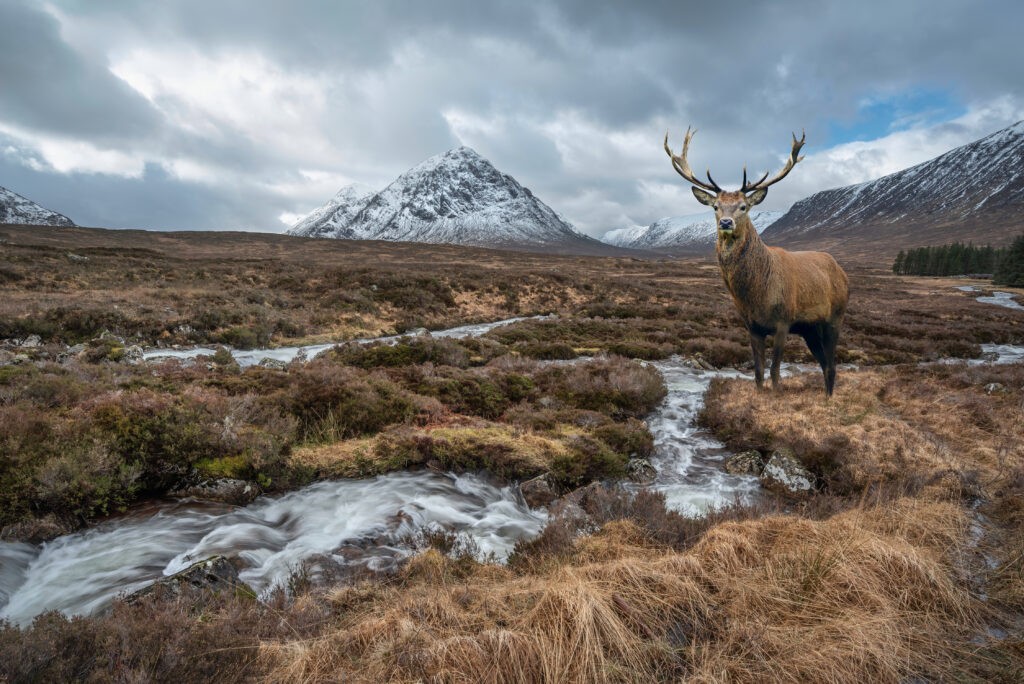
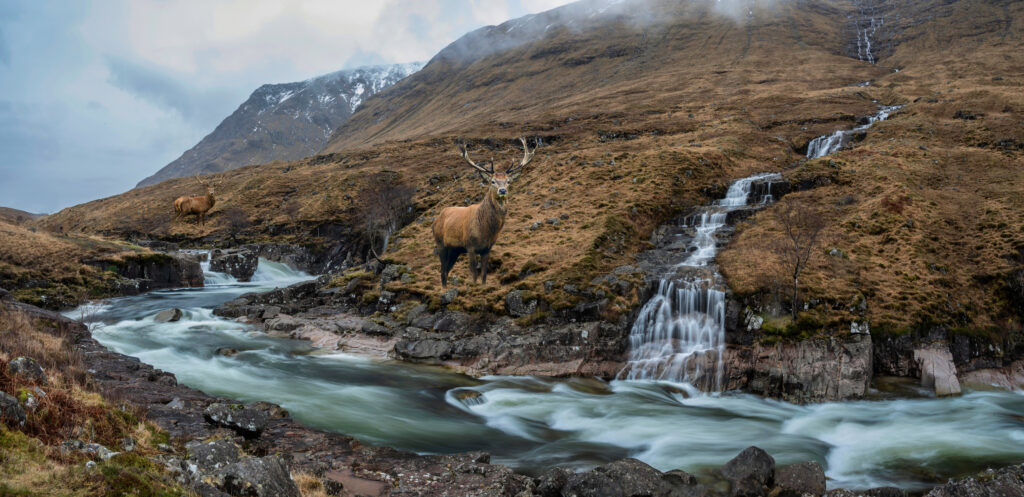
The red deer is the largest land mammal in Britain, and nowhere does it feel more iconic than in the Scottish Highlands. Seeing a stag outlined against a sunrise, antlers branching wide like ancient oak limbs, is one of Scotland’s great wildlife spectacles.
Red deer thrive across open moorland and upland glens, particularly within Cairngorms National Park, where forests blend into sweeping hills. They are also common across the Isle of Skye and the rugged landscapes of the west coast.
Where to See Them:
- Cairngorms National Park – Glenmore Forest, Loch Morlich, and surrounding glens
- Isle of Skye – Around Broadford and the foothills of the Cuillin
- Isle of Rum – Home to one of Scotland’s most studied red deer populations
Best Time to Visit:
- Autumn (September–November) – Rutting season; dramatic stag battles and roaring calls
- Spring (April–May) – Calving season and quieter hillsides
Autumn is particularly powerful. The air turns sharp and golden, and the sound of stags roaring across mist-filled glens feels almost prehistoric. It is a moment where Scotland’s wild past seems to echo into the present.
Golden Eagle — The Ruler of the Mountain Skies
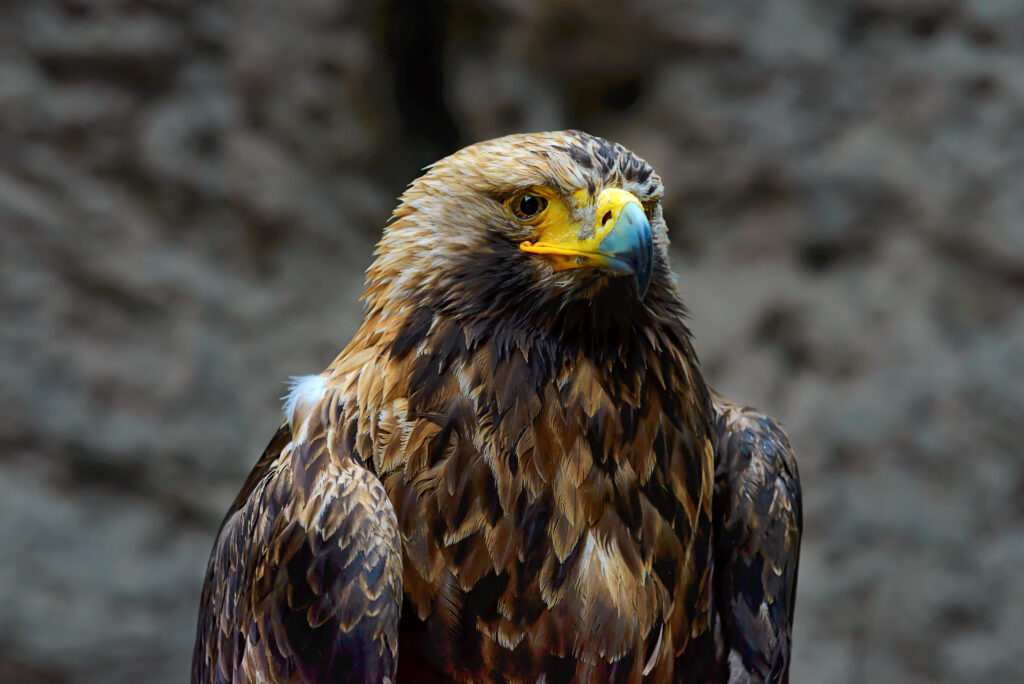
Few experiences compare to spotting a golden eagle soaring effortlessly above a Highland ridge. With a wingspan exceeding two meters, these birds dominate the skies with quiet authority.
Golden eagles favour remote, open landscapes where they can hunt undisturbed. The Isle of Mull has gained a reputation for reliable sightings, while the vast wilderness of Sutherland offers dramatic backdrops for eagle watching.
Where to Look:
- Isle of Mull – Particularly around Loch na Keal
- Sutherland Highlands – Remote glens and high ridges
- Cairngorms National Park – Mountain slopes and corries
Viewing Tips:
- Find high vantage points
- Scan ridgelines for large silhouettes
- Visit in spring or autumn for clearer visibility
Seeing a golden eagle in the wild is more than a sighting, it is an emotional experience. There is something timeless about their flight, as though they have ruled these mountains long before roads and railways carved through the land.
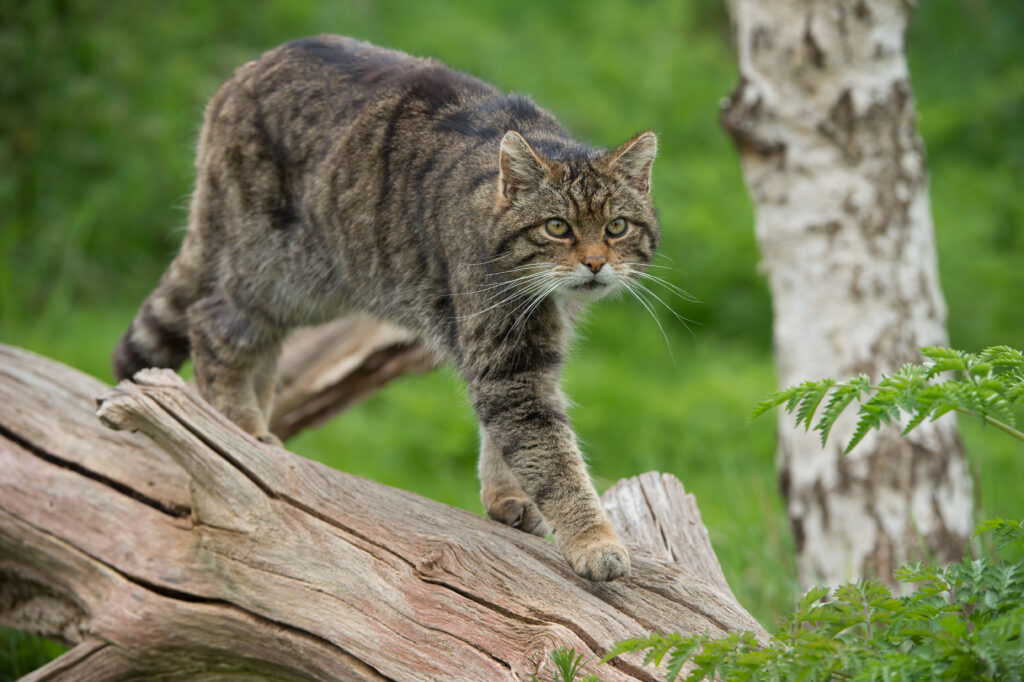
Scottish Wildcat — The Highland Phantom
Often called the “Highland tiger,” the Scottish wildcat is one of Britain’s rarest mammals. Slightly larger and more muscular than a domestic cat, it carries itself with a fierce independence befitting its remote woodland home.
Wildcats inhabit parts of the Highlands, particularly within forested areas of the Cairngorms. However, sightings are exceptionally rare. Habitat loss and hybridisation have threatened their survival, and conservation efforts are ongoing to protect remaining populations.
While encountering one in the wild is unlikely, exploring ancient pine forests where they roam offers its own sense of connection to Scotland’s fragile wilderness. Supporting conservation centres in the region helps protect this iconic species for the future.
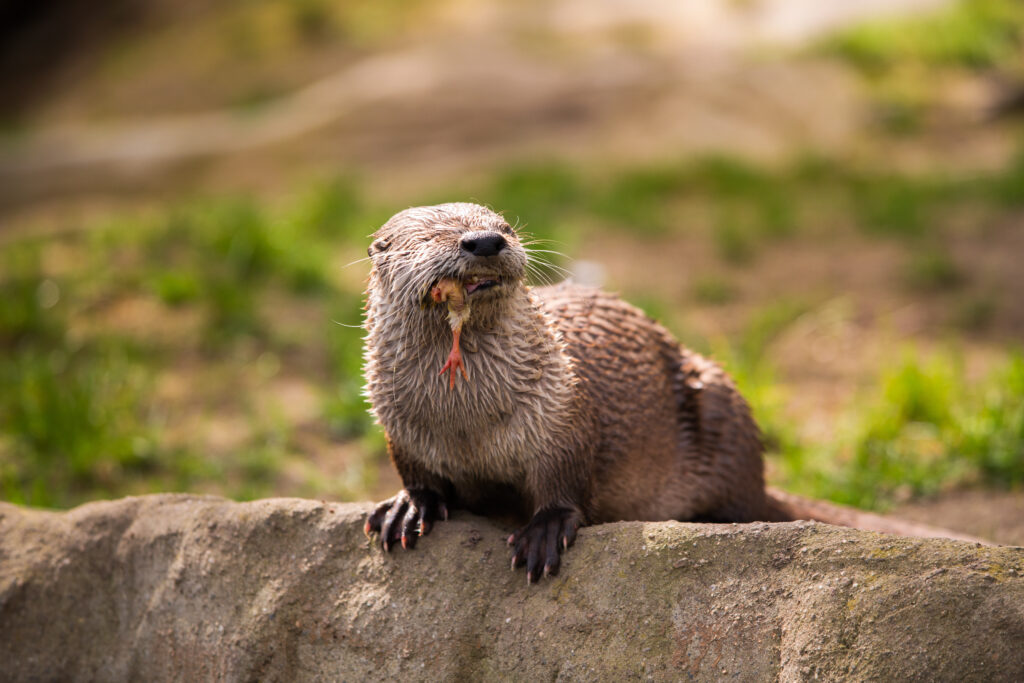
Otters — Quiet Spirits of the Shore
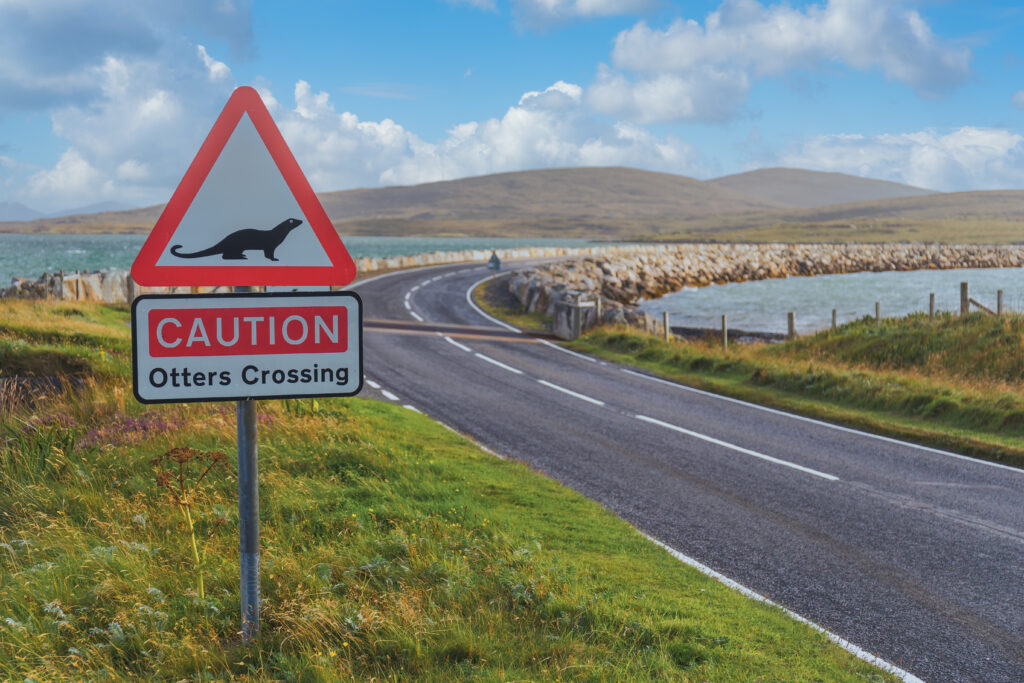
Along Scotland’s west coast, where sea meets stone, otters thrive. Unlike in many other countries, Scottish otters are often active during daylight hours, particularly at dawn and dusk.
The Isle of Skye is renowned for sightings, especially around Elgol and Loch Harport. The Moray Firth coastline also provides excellent opportunities, particularly in calmer weather.
Best Places for Otters:
- Isle of Skye – Elgol, Loch Harport
- Moray Firth Coast – Quiet inlets and estuaries
- Loch Carron – Sheltered sea loch habitats
Patience is key. Sit quietly along the shoreline and allow the landscape to settle. Often, a small ripple in the water is the first clue that an otter is nearby.
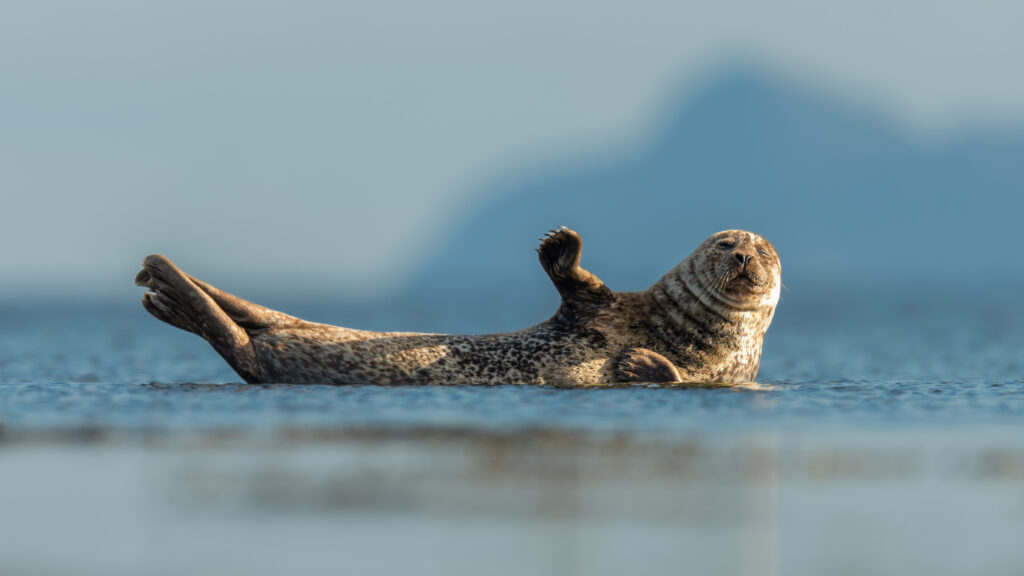
Seals — Scotland’s Coastal Residents
With over 10,000 miles of coastline, Scotland provides ideal habitat for both grey and common seals. These inquisitive animals can often be seen resting on rocky outcrops or sandbanks.
Prime Locations:
- Orkney Islands – Large summer colonies
- Shetland Islands – Excellent seal watching
- Isle of Mull – Coastal boat tours
- North Coast 500 route – Numerous sheltered bays
Summer offers the best opportunities, particularly during pupping season. Watching seals bask in the sun while seabirds wheel overhead captures the peaceful rhythm of Scotland’s coastal life.
2. The Highlands — A Landscape Alive
The Scottish Highlands remain one of Europe’s most important wilderness regions. Vast moorlands stretch beyond sight, mountain peaks rise sharply from glens, and ancient Caledonian pine forests provide shelter to rare species.
Within Cairngorms National Park, wildlife thrives across varied habitats. You may encounter:
- Mountain hares (white in winter)
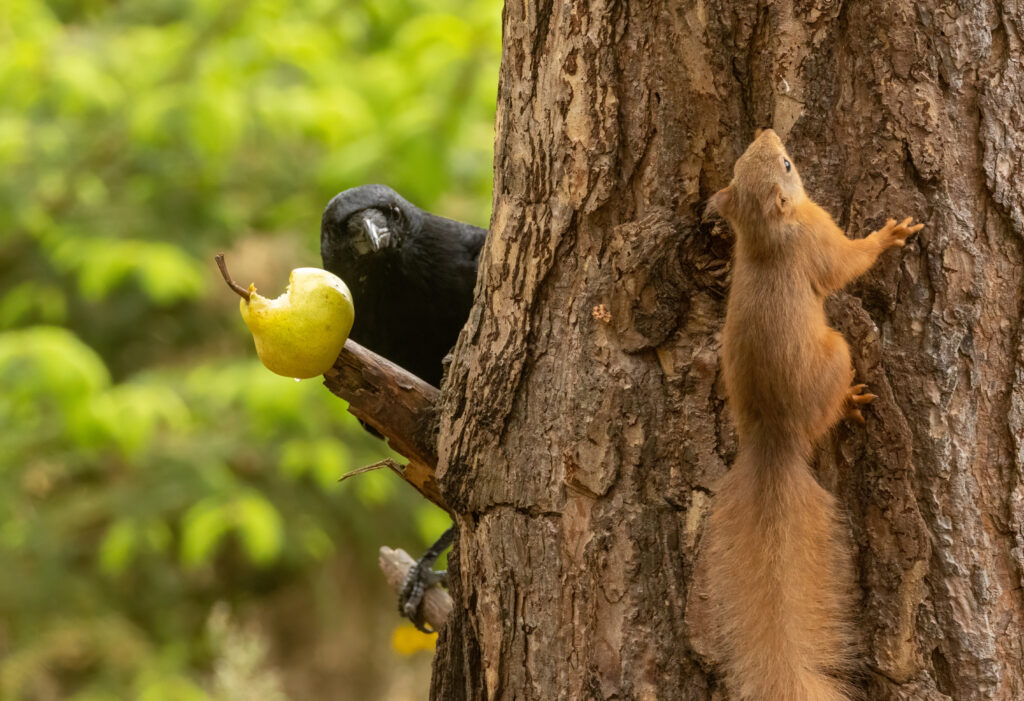
- Red squirrels in pine forests
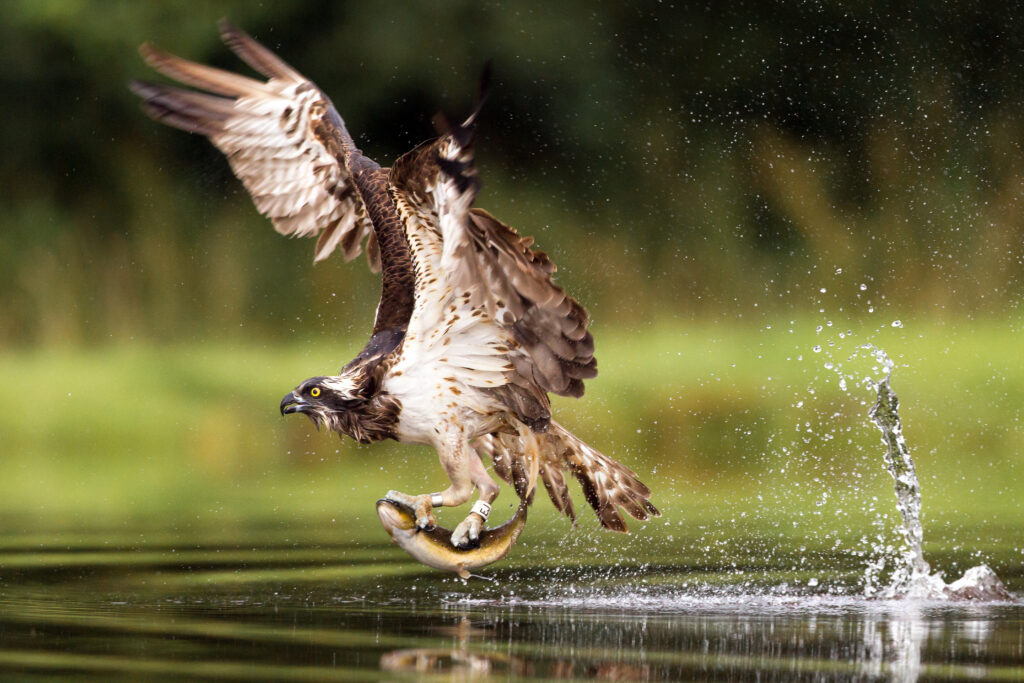
- Ospreys diving into lochs
- Pine martens moving silently through woodland
Further west, the dramatic landscapes of Torridon and Wester Ross combine towering mountains with rich coastal ecosystems. Here, it is entirely possible to see deer on a hillside in the morning and seals in a sea loch by afternoon.
The Highlands are not just scenic, they are ecological strongholds where Scotland’s wild character remains intact.
3. Scotland’s Islands — Nature at the Edge of the Atlantic
Scotland’s islands feel elemental and untamed. Windswept cliffs, machair grasslands, and turquoise waters create habitats teeming with life.
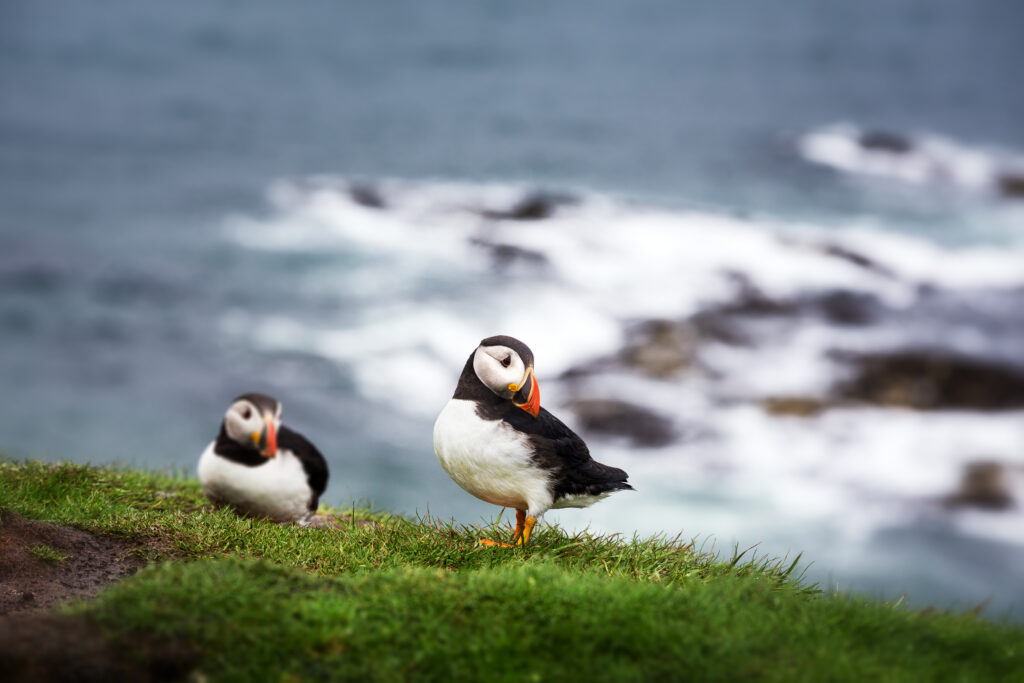
The Isle of Mull is celebrated for its sea eagles, while Skye combines dramatic geology with abundant wildlife. The Outer Hebrides are home to thriving seabird colonies during the summer months.
Wildlife Highlights on the Islands:
- White-tailed sea eagles
- Puffins and gannets
- Grey seals
- Otters along rocky shores
Island wildlife encounters often feel intimate and unhurried. With fewer crowds and vast open landscapes, there is space to observe nature quietly and respectfully.
4. Highland Cows — Scotland’s Gentle Icons
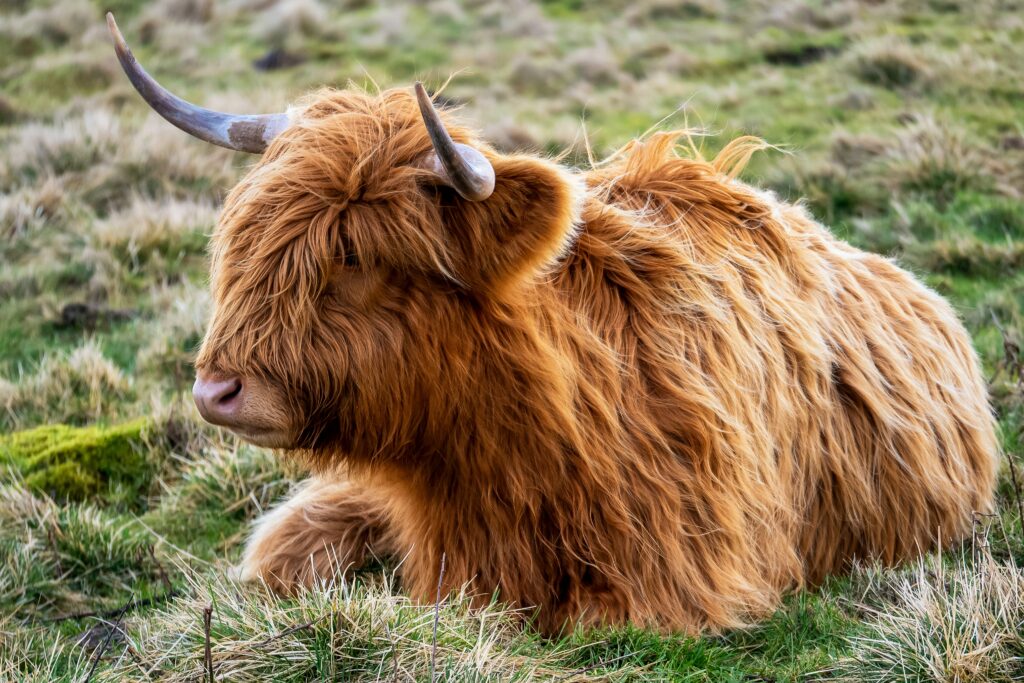
Though not wild animals, Highland cows deserve a place in any discussion of Scotland’s wildlife heritage. With their long horns and shaggy russet coats, they are perfectly adapted to endure harsh Highland winters.
You will often see them grazing calmly in open fields across the Highlands and islands, particularly along scenic driving routes. Their thick double-layered coats protect them from wind and rain, while their docile temperament makes them favourites among visitors.
Highland cows symbolize Scotland’s rural traditions and the enduring relationship between land and community. While deer and eagles represent the untamed wild, these gentle cattle represent the human story woven into the same landscape.
5. Wildlife by Season — When to Visit
Scotland transforms dramatically throughout the year, and each season offers unique wildlife opportunities.
Spring (March–May)
- Ospreys return from migration
- Deer calves appear
- Forests fill with birdsong
Summer (June–August)
- Seabird colonies at their peak
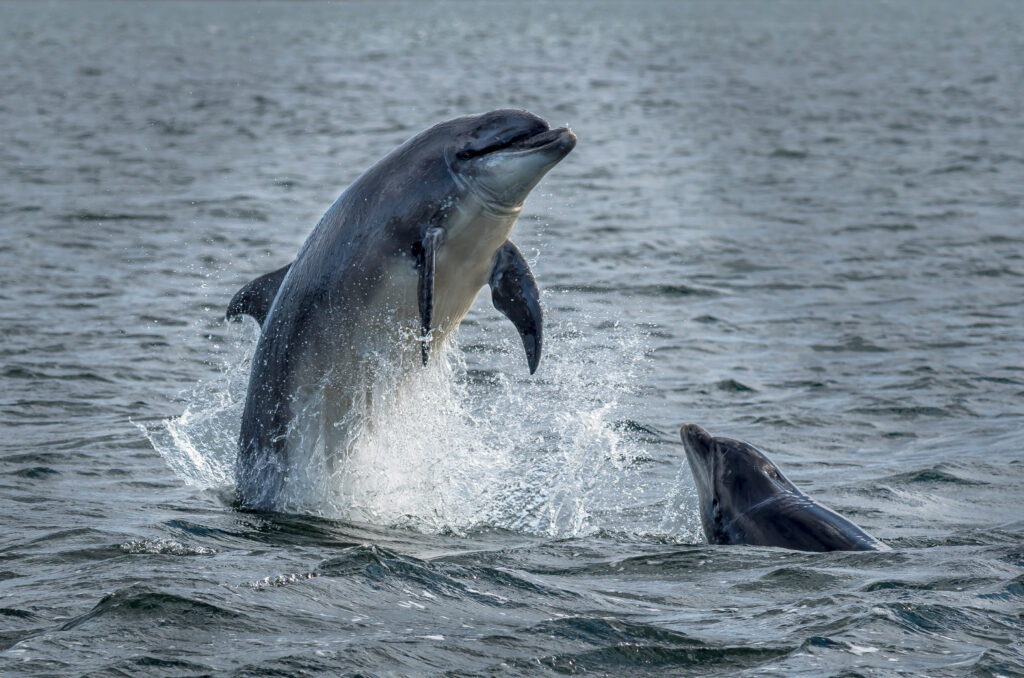
- Dolphins in the Moray Firth
- Extended daylight for photography
Autumn (September–November)
- Red deer rutting season
- Golden hues across moorland
- Crisp air and dramatic skies
Winter (December–February)
- Snow-dusted mountains
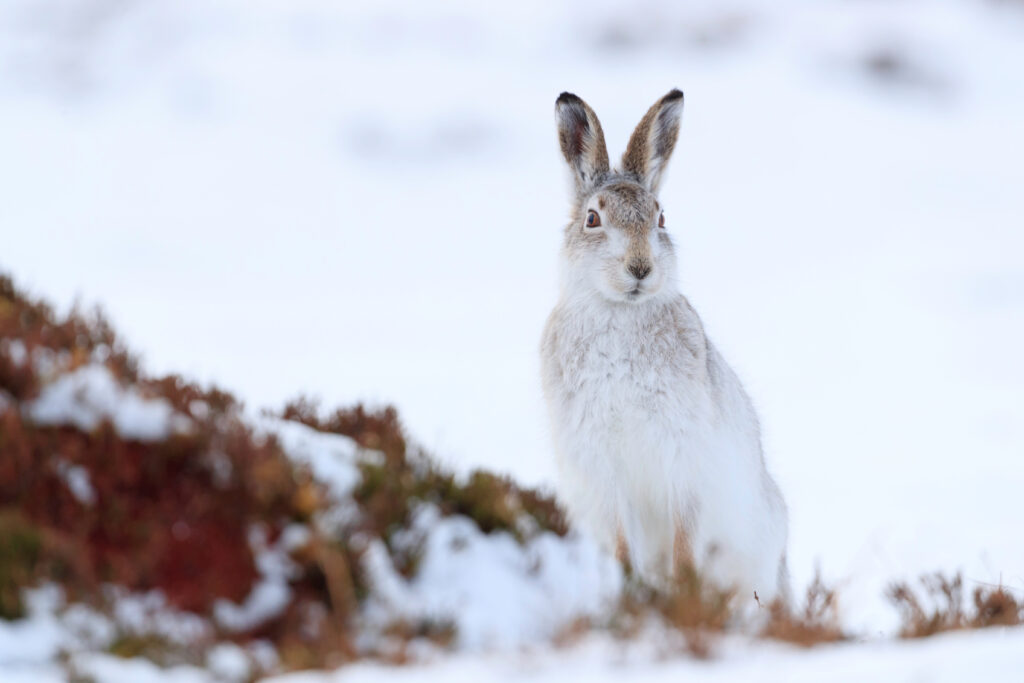
- Mountain hares in white coats
- Quieter landscapes and fewer visitors
There is no single “best” time to visit, only the different moods of Scotland’s wilderness.
6. Responsible Wildlife Watching
Scotland’s wild spaces are fragile. Ethical wildlife watching ensures that future generations can enjoy the same encounters.
- Keep a respectful distance
- Avoid disturbing nests or dens
- Stay on established paths
- Never feed wild animals
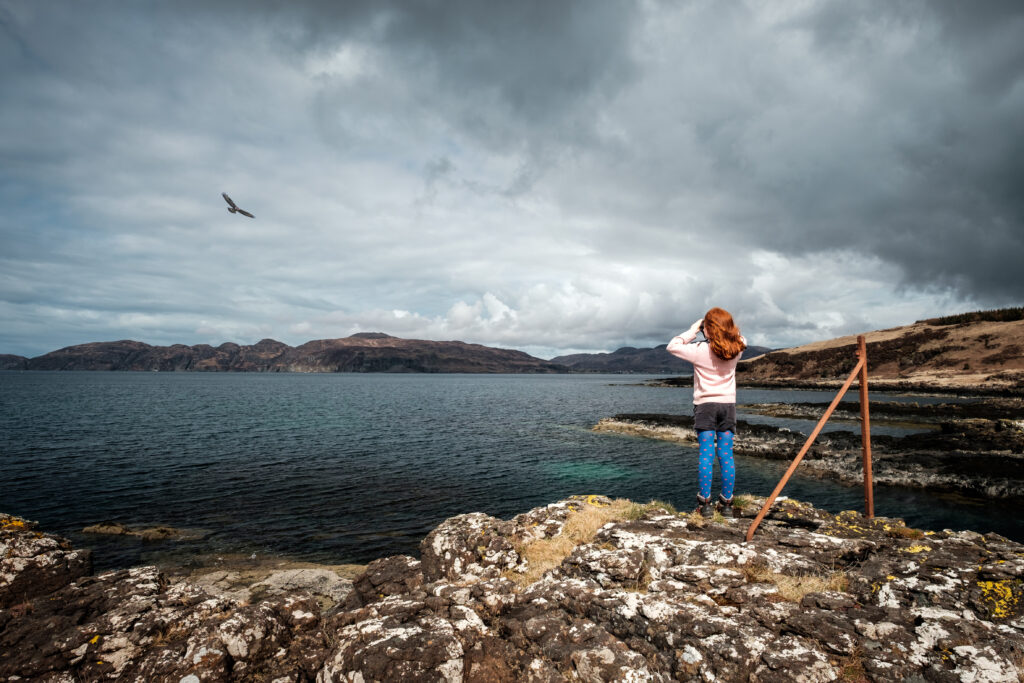
- Use binoculars and telephoto lenses
Wildlife watching in Scotland is about observation, not intrusion. The greatest moments often come when you slow down, stay quiet, and let nature reveal itself.
Scottish Wildlife is waiting. Are you ready?
Scotland’s wildlife is not confined to reserves or hidden corners, it lives and breathes across mountains, forests, and seas. To hear a stag roar through autumn mist, to glimpse an otter along a silent shoreline, or to watch a golden eagle ride the wind is to experience Scotland in its purest form.
This is a country where wilderness still shapes identity. Where landscapes feel ancient. Where nature remains free.
And for those willing to rise early, walk patiently, and look carefully, Scotland’s wild side is waiting.